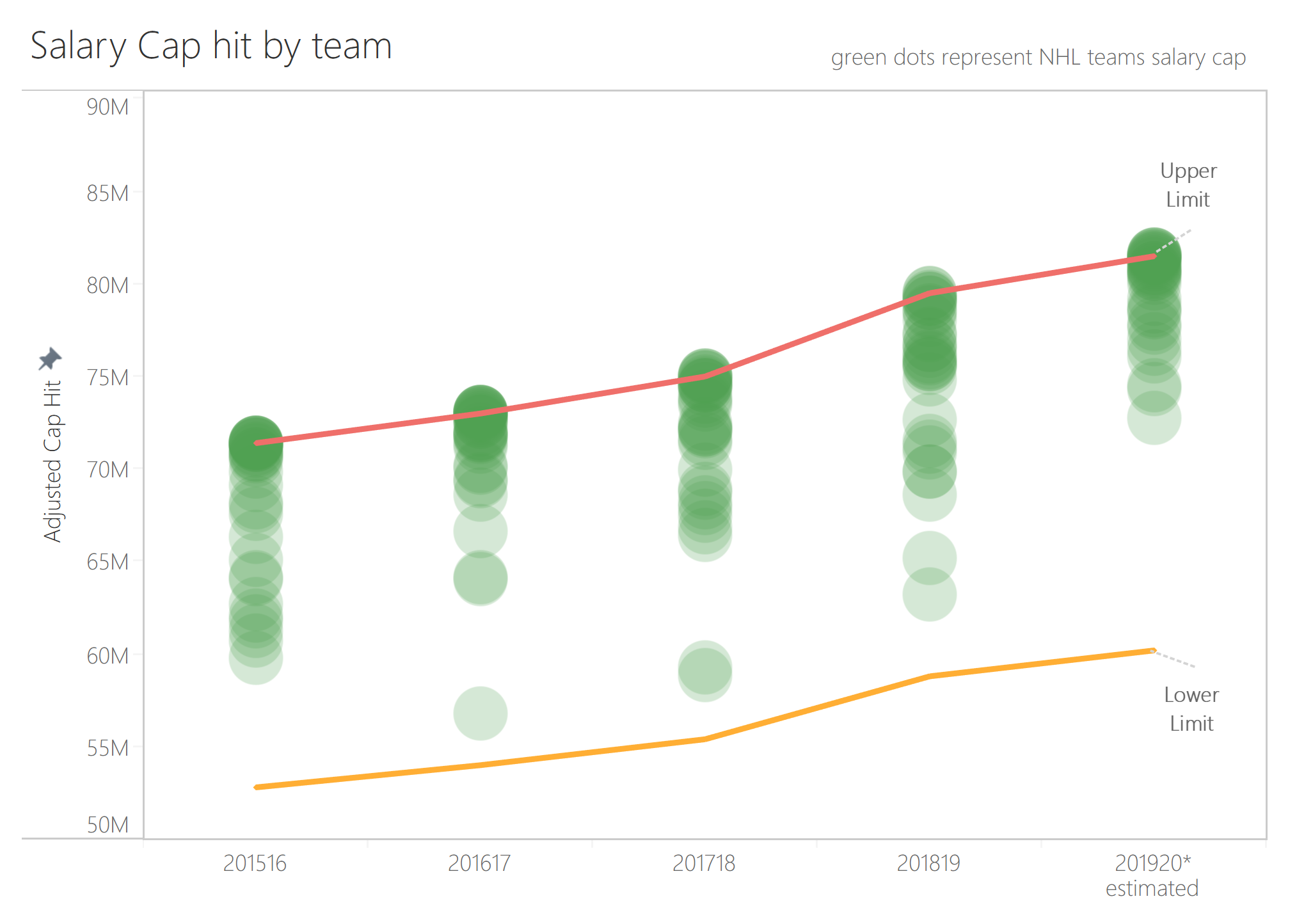
When the Seattle Kraken Expansion Draft rolls around next year, the Senators won’t be letting any highly valuable assets go for nothing. Besides being one of the NHL’s worst teams last season, Ottawa was also one of the cheapest.
Ottawa’s 62 points were second-worst last season, behind only the Detroit Red Wings, and its $70.516 million in player salaries ranked 27th out of 31 teams, according to Spotrac.
Only in mid-October did the Senators exceed the salary floor of $60.2 million, leaving them with $11.8 million in cap space as of November 14. Unpopular owner Eugene Melnyk probably wouldn’t spend much money in better times either, though. This makes it likely that the Senators will be hovering around the salary floor again next offseason when they have to submit their protection list for the Expansion Draft.
So, which Senators players will be available to the Kraken?
Here’s why Seattle will likely choose a depth player from Ottawa.
Assumptions
Because of their large amount of cap space, the Senators might be willing to acquire another team’s bad contract if it comes with a top prospect and/or high draft pick. Look for these deals to happen around the 2021 trade deadline or offseason, especially if the NHL has to go very long without fans in arenas because of the pandemic.
Those bad contracts will be available for the Kraken to choose no matter what team they belong to, so the question is whether Seattle general manager Ron Francis believes it’s worth taking on any of those pricy risks. If it’s a serviceable player with only a year remaining on his contract, Francis could be enticed with an extra player or Entry Draft pick through a side trade.
Senators Offseason Wildcards
With so much cap space, Ottawa has room to bring in more free agents this offseason. All indications are that the Senators are content with their roster, however, after signing forward Alex Galchenyuk to a one-year, $1.05 million deal late last month.
Even if Melnyk permits a larger payroll, any new contracts will be short term because of revenue uncertainty over COVID-19.
Protected List
Forwards
Brady Tkachuk, LW (Lock) Drake Batherson, RW (Lock) Connor Brown, RW (Lock) Colin White, C Logan Brown, C Evgenii Dadonov, RW Austin Watson, RW
Dadonov, 31, signed a three-year, $15 million free agent contract that’s back-loaded with $6.5 million due in the final year of the deal. So if the former Florida Panther fails to click and falls down the depth chart next season, perhaps the Senators will leave him unprotected.
Defense
Thomas Chabot (Lock) Nikita Zaitsev (Lock) Josh Brown
Acquired in an offseason trade from Florida, the 6-5 and 217-pound Brown is no more than a fifth or sixth defenseman. But being a right-handed shot will help Brown’s stock when the Sens submit their protected list.
Goalie
Matt Murray (Lock)
After being acquired from Pittsburgh and signing a four-year, $25 million contract, Murray would have to have a disastrous first season in Ottawa to be left unprotected. The two-time Stanley Cup champion does have a lot to prove after a disappointing 2019-20 in which he was 20-11-5 with a 2.87 GAA and .899 save percentage.
Top Seattle Kraken Expansion Draft Players – Senators
Forwards
Center Chris Tierney (6-1, 195 pounds) had an unspectacular 11 goals and 26 assists in 71 games last season, but he was Ottawa’s best faceoff man (51.17 percent) and a good penalty killer with four short-handed goals. The six-year veteran with 61 goals, 128 assists and 189 points in 436 games is only 26 and would be a good role-playing, bottom-six forward who could occasionally move up to the second line.
Left winger Nick Paul is a year younger than Tierney and has less NHL experience (112 games, 13 goals, 15 assists, 28 points). But he’s bigger at 6-3 and 219 pounds with good speed. He can also kill penalties and would be a bottom-six forward at best.
For the Senators, the final forward to protect from the Seattle Kraken in the Expansion Draft might come down to deciding between Tierney and Austin Watson. At Expansion Draft time, Watson will have two years and $3 million remaining compared with Tierney’s one year and $3.5 million. Watson is two years younger, less skilled but bigger (6-4, 204 pounds) and plays a more rugged game. As the younger, skilled Sens develop, they’re going to need veteran players such as Watson to protect them.
Fun fact: From 2014-15 to 2017-18 with the Sharks, Tierney scored eight goals and 12 points in 18 games against the Vancouver Canucks. He also notched four assists in four games against the Canucks since he’s been a Senator. So he’s got that going for him if he ends up back in the Pacific Division.
Defense
Seattle’s pickings appear slim among Ottawa blue-liners with Christian Wolanin, 25, and Maxime Lajoie, 22, leading the way.
Wolanin (five goals, 10 assists and 15 points in 43 career NHL games and eight goals, 24 assists and 32 points in 49 AHL games) missed much of 2019-20 to injury. But the 6-2, 185-pound left-hand shot figures to compete for the third pairing next season.
The speedy Lajoie (seven goals, eight assists and 15 points in 62 NHL games) has faded since a quick start to his NHL career in 2018. He’ll likely be back in AHL Belleville, where the left-handed shooting Lajoie notched four goals, 13 assists and 17 points in 48 games last season.
Goalie
After Murray, the Senators have a bunch of question marks on their goaltender depth chart. No. 2 Anders Nilsson, who will be an unrestricted free agent in 2021, is a career backup and not worth considering. Marcus Hogberg and Joey Daccord figure to continue playing in Belleville of the AHL, and Filip Gustavsson is on loan to Sodertalje SK in Sweden.
Unless Hogberg or Daccord emerge with a spectacular season, Gustavsson is the most intriguing option for Seattle. The 2016 second-round pick of the Pittsburgh Penguins was a highly touted prospect who was named the top goalie of the 2018 World Junior Hockey Championships after leading Sweden to a silver medal. He has been disappointing over two-plus seasons in Belleville (29-28, 3.28 GAA, .891 save percentage), but the 22-year-old is off to a nice start in 14 games at Sodertalje (8-5, one shutout, 2.20 GAA, .925 save percentage).
Goalies take a lot longer to develop. Calgary Flames netminder Jacob Markstrom, for example, split time between the AHL and the Florida Panthers at the same age and never became a No. 1 goalie until he was 27 with the Canucks. So if Gustavsson can get back on track, the Kraken might consider taking him as a project for their third goalie.
Side Deal Scenarios
Ottawa has a deep prospect pool (recently ranked seventh by The Athletic), and it added three first-round picks during the 2020 NHL Entry Draft. Unfortunately for Seattle, the Senators’ best prospects will be protected or be exempt from Expansion Draft protection because of a lack of pro experience.
Unless many fringe players have breakout seasons next year, Sens GM Pierre Dorion should have no need to pursue any trades to steer Francis from taking certain players. Dorion does have three 2021 second-round Entry Draft picks, as well as all of his 2022 and 2023 picks, though, should the need arise.
Other Notes
The Senators’ top prospects such as C Josh Norris, LW Alex Formenton and D Erik Brannstrom are exempt from the Seattle Kraken in the Expansion Draft due to lack of North American pro experience.
Jim Wilkie is a longtime Northwest journalist, former NHL editor and NHL Insider writer for ESPN.com, a onetime GSHL All-Star, and SJHA hockey dad. Follow him on Twitter @jimwilkie.
This is the first in Sound Of Hockey’s series on the Seattle Kraken NHL Expansion Draft, which will examine all 30 of the participating NHL teams over the next couple of months. Read our previous story that explains the rules of the Expansion Draft here. We hope this series will help you get a grasp on who will be available for the Kraken to target when they assemble their inaugural team next summer. Enjoy!
The Detroit Red Wings were bad last year. How bad? They earned 39 points which was last in the NHL by 23 while being outscored by 122 goals, more than double the next worst in the NHL. If the traditional stats don’t convince you then consider the Red Wings were last in Corsi for (45.99), last in high-danger chances (483), and second-worst in high-danger save percentage (.770). They couldn’t score, couldn’t create chances, and didn’t make big saves. That adds up to 39 points.
General Manager Steve Yzerman has a rebuild on his hands and although they have cap space going into next season, the Red Wings are in full youth movement mode. That means that the Expansion Draft options for the Seattle Kraken will most likely yield a depth player at best.
Assumptions
Yzerman is building around his young players which means that guys like Dylan Larkin or Anthony Mantha will be protected and unavailable. The Red Wings won’t be in contention next season so will not be buying at the trade deadline. In that same vein, it’s unlikely they will move any players at the trade deadline that are of interest to Seattle.
Offseason Wildcards
Detroit’s roster is mostly set heading into the season, so any major additions or blockbuster trades seem unlikely at this point.
Protected List
Yzerman has some decisions to make here. The vets he has either will be unrestricted free agents in 2021 or aren’t worth protecting. He’ll lean on his young players and will have to make a choice of exposing depth players.
Forwards
Up front, a player to note is former Tri-City Americans center Michael Rasmussen. Selected ninth overall in 2017, Rasmussen spent his rookie year of 2018-2019 in the NHL, appearing in 62 games for the Red Wings and picking up 18 points. Last season he was sent to the AHL and spent some time injured while recording 22 points in just 35 games. It seems like a long shot he would be exposed, considering his upside at just 21-years-old, but it may come down to how he performs this season.
Like Rasmussen, this coming season will be an important one for Evgeny Svechnikov. He has yet to crack the NHL lineup as a regular, and this coming year will say a lot about his future with the Red Wings. He burst out with a strong rookie season in the AHL with 51 points but has only picked up 55 in the following two seasons. Will Yzerman give up on the former first-round pick – one that was selected by the previous regime – or give him a chance to earn a roster spot and protection?
Svechnikov is far from a lock to be protected. If Yzerman feels the 24-year-old has peaked, he may very well feel comfortable in exposing him. If that’s the case, look for the Red Wings to protect forward Givani Smith instead. Smith is two years younger than Svechnikov and may ultimately have a better shot at contributing in the NHL.
For this exercise, we’ll protect Svechnilov which makes Detroit’s protected list look as follows:
Protected
Dylan Larkin Anthony Mantha Tyler Bertuzzi Robby Fabbri Vladislav Namestnikov Michael Rasmussen Evgeny Svechnikov
Defense
The biggest challenge for Yzerman here is between Dennis Cholowski and Gustav Lindstrom. Cholowski, 22, is a left defenseman who was a first-round pick in 2016 but has only played nine NHL games and two less-than-exciting seasons in the AHL with Grand Rapids. Lindstrom is the same age and has played 16 NHL games but with less offensive upside than Cholowski.
There is a strong chance one of the two will be left unprotected.
Protected
Danny DeKeyser Filip Hronek Dennis Cholowski
Goalie
There isn’t much to choose from here. Detroit signed Thomas Greiss this offseason and do not have a long-term option behind him. He’ll be protected while back up Jonathan Bernier is a UFA after this season and won’t be in play for the expansion draft unless he is re-signed during the season.
Top Expansion Draft Players
Players who could be on the radar to be selected by Seattle:
Forwards
Givani Smith
Defense
Gustav Lindstrom Troy Stecher
Thoughts
The Seattle Kraken are not going to find a top-end player from the Red Wings in the Expansion Draft. Detroit is rebuilding, so it can and will protect its best players on the roster.
Svechnikov very well may be exposed, and he’ll be someone to ponder for the Kraken. His production has regressed in pro hockey after putting up huge numbers in the QMJHL, and if he’s available that means he didn’t play well again this coming season.
Another forward to really consider will be Smith, if he is left unprotected. He’s 22 years old but doesn’t project to be a top-six player in the NHL. Even so, the lack of huge numbers in the AHL doesn’t mean he couldn’t be a grinder that might give Seattle some good, hard minutes as a third or fourth-line guy or even an AHL depth player.
Still, with the pickings slim up front, the Kraken most likely will be looking at one of Detroit’s available defensemen. It makes more sense that the Red Wings will protect Cholowski since he has more of an offensive skill set. Lindstrom isn’t a flashy player or high pick, but could end up providing defensive depth. It’s just hard to see him being anything other than a bottom pairing guy or potentially an AHL player for the Kraken.
If Seattle prefers a player with more experience, Troy Stecher, 26, could be an option on defense. Detroit brought the former Vancouver Canuck in as a free agent this offseason. Stecher is a solid two-way defenseman who has played in 286 NHL games and comes with an affordable $1.7 million cap hit.
Having a veteran presence on the back end could prove valuable, so Stecher might be the best option here.
Side Deal Scenarios
Detroit has over $9 million in cap space with no prohibitive contracts on the books. Without that pressure on Yzerman to make a deal, it’s hard to find a realistic trade scenario.
Other Notes
Forward Frans Nielsen has a modified no-movement clause in his contract. Forwards Darren Helm, Valterri Filppula, Luke Glendening, Bobby Ryan, and Sam Gagner are all scheduled to be UFA prior to the 2021-2022 season.
On defense, Mark Staal, Patrik Nemeth, Jon Merrill, and Alex Biega are UFA after the completion of next season.
Now that the NHL Entry Draft is done, and the bulk of the NHL Free Agency period is complete, we can officially start zeroing in on how teams might approach the Seattle Kraken NHL Expansion Draft next summer. There will certainly be roster moves between now and that momentous event, but those changes will pale in comparison to the volume of transactions we’ve witnessed over the past three months.
Here at Sound Of Hockey, we will be going through every team over the next few weeks to project who will be protected and who might be targeted by the Kraken, and we will look to uncover all the nuances that come with the Expansion Draft.
Before we start, let us walk through Expansion Draft rules. 30 of the 31 existing NHL teams will be participating, with the exception being the Vegas Golden Knights, who are exempt. Each team participating will lose one player to the Kraken.
Seattle Kraken Expansion Draft Rules
Seattle must select one player from the 30 participating teams. They are required to select at least 14 forwards, nine defensemen, and three goaltenders. That would leave four additional players for the Kraken to choose for whichever position they see fit. Additionally, 20 of the players selected must be under contract for the 2021-22 season, and the aggregate salary cap hit must be between 60 and 100 percent of the 2020-21 upper limit of the cap.
Other Teams’ Expansion Draft Rules
Existing clubs will be able to protect either:
7 Forwards, 3 Defensemen, and 1 Goalie
8 Skaters (any combo of Forwards and Defensemen) and 1 Goalie
Any player with a full No-Movement Clause in his contract must be protected unless said player waives his NMC, which was not common in the 2017 Expansion Draft.
Exemptions
Players with two or fewer seasons of pro hockey experience in North America, either AHL or NHL, are automatically exempt from the Expansion Draft and therefore do not need to be protected by their teams. There is also a threshold of 10 games that needs to be exceeded to count as a season of pro hockey.
A good example of this will be Quinn Hughes. Hughes only played five games in 2018-19, and thus that season will not count as a pro season. Since he played more than 10 games in the 2019-20 season, he can play the entire upcoming season with no significant injuries, and he will still have only two completed seasons when the Expansion Draft occurs, making him exempt.
Exposure Requirements
As part of their requirements, the 30 teams participating in the Seattle Kraken Expansion Draft must expose two forwards and one defenseman that are under contract for the 2021-22 season. These players are required to have played 40 games in the 2020-21 season or have 70 or more NHL games over the 2019-20 & 2020-21 seasons combined. Similarly, teams must expose a goalie that is either under contract in 2021-22 or a restricted free agent following the 2020-21 season.
Worth noting, we highly anticipate that the games played requirements for forwards and defensemen will be adjusted down due to the 2019-20 season being abbreviated and the likelihood that the 2020-21 season will also be shorter than the usual 82 games.
Career-Ending Injuries Clause
Players with potential career-ending injuries who have missed more than the previous 60 consecutive games may not be used to satisfy a team’s player exposure requirements unless approval is received from the NHL. These players will be deemed exempt from selection. Ryan Kesler would be a good example of a player that fits in this category. Due to injuries, Kesler has not played a game since the 2018-19 season and is unlikely to take the ice next season, even though he is under contract until 2022. In this scenario, Kesler cannot be used to fulfill one of the spots in the two-forward exposure requirement.
These exposure requirements are designed to guarantee the 30 NHL teams participating make legitimate NHL-level players available to Seattle.
2017 Expansion Draft
To get some insight on how the Seattle Kraken Expansion Draft may play out, we can look back at the 2017 Expansion Draft because the rules were identical for the Vegas Golden Knights.
Here is how NHL teams chose to protect their players, either via the seven forwards, three defensemen, and one goalie scenario, or via the eight total skaters and one goalie route.
This is how Vegas drafted its players across positions.
As a reminder, the minimums for forwards and goalies was 14 and three respectfully, thus Vegas used all four of its position agnostic picks on defensemen.
The Rest of the Story
It gets more complicated. Another part of the Expansion Draft will be the trades that occur before, during, and after the event. Predicting these scenarios will be downright impossible without insider information up until the very moment the Kraken submit their picks to the league. A lot of this will involve wheeling and dealing by teams to try to manage their cap space, so here are some of the terms and scenarios you should be aware of before the Expansion Draft.
Pending Unrestricted Free Agents
There will be several players exposed by their teams that will be “Pending Unrestricted Free Agents” (UFA). The scenario is that a player will have just played the last year of his NHL contract with his team and will become an Unrestricted Free Agent roughly one week after the Expansion Draft. The Kraken will have a 48-hour window before their selections are made to talk and negotiate with any of these UFAs. An example here is where a player like Taylor Hall is left unprotected by Buffalo. Seattle could discuss a potential contract term for a new deal with Hall. If they reach an agreement, Seattle would then choose Hall in the Expansion Draft. If they cannot reach a deal, Seattle would find some other player to select from Buffalo.
Draft and Let Walk
This is a scenario where Seattle would draft a player that they know will become an Unrestricted Free Agent on ~July 1st (or a week after whenever the Expansion Draft actually happens). This would imply no actual intention of signing this pending free agent. This would come into play if the Kraken do not see any other notable assets on the NHL team’s roster, but selecting this UFA would fulfill the rule of selecting one player per team. Vegas did this with three players: Chris Thorburn (WPG), Connor Brickley (CAR), and Jean-Francois Berube (NYI).
Draft and Flip
In this scenario, the Kraken more than likely would have a predetermined arrangement with another NHL team that if Seattle chooses Player X on Team A, then Team B would trade assets (either players from Team B or picks for the Amateur Draft) to Seattle for Player X. After the Vegas Expansion Draft there were four players that were immediately traded to another NHL team, literally being jettisoned the following day. Alexei Emelin (MON -> NSH), David Schlemko (SJS -> MON), Marc Methot (OTT -> DAL), and Trevor van Riemsdyk (CHI -> CAR) are in this category.
Side Deals
The side deal is the meatiest of meaty subjects in the Expansion Draft. Fans and the media alike point to the side deals as the reason Vegas got so good so fast. Vegas completed nine side deals leading up to and during the Expansion Draft.
This is where Seattle would negotiate terms of their player selection with each respective team in advance. An example of this was when Anaheim agreed to trade Shea Theodore to Vegas if Vegas selected Clayton Stoner in the Expansion Draft. Clayton Stoner was injured and would never play another NHL game. Theodore was a young, up-and-coming defenseman for Anaheim. Vegas gets a young prospect, while Anaheim would get the Clayton Stoner contract and financial commitment taken off their books.
Side deals in the Expansion Draft netted the Golden Knights an additional six players, 10 Entry Draft picks, and signing rights to one player. The media narrative going around is that teams will be less wiling to do these side deals with Seattle, but with a flat salary cap expected over the next few seasons, you can imagine that teams will be forced to unload some contracts to remain cap compliant.
Summary
We hope this gives you a good overview on what to expect in the Expansion Draft scenarios as the Kraken get closer and closer to selecting their team. There is no doubt NHL rosters will change before summer, 2021, but we can start to circle some players on teams that may be candidates, and that is exciting stuff.
Free agency is upon us and, even though the Seattle Kraken will not be participating, there are still things to keep an eye on this year that could impact the Kraken down the road.
Here are my top 5 things to keep an eye on during free agency.
The NMC
Look for any players signing deals that have a Full No-Move Clause (NMC). NMC’s are generally reserved for the cream of the crop of free agent players. A NMC means that the team must protect the player in next summer’s Expansion Draft. It is highly likely that these players would be protected without the NMC, but the NMC will limit teams’ options. Anything that restricts other teams’ options and flexibility should be considered a good thing for Seattle.
Cap Crunch teams
All teams will be impacted by the flat salary cap related to COVID-19 lost revenues, but the more teams spend to the cap, then the more vulnerable these teams will be during the Expansion Draft. This could benefit Seattle during the Expansion Draft in 2 ways:
Teams could expose some high-value, high-cap-hit players with the hopes that Seattle selects these players to shed some salary cap. Of course, this doesn’t mean Seattle will select this player, so let’s go to #2.
Similar to what happen in the Vegas Expansion Draft, teams could negotiate side deals with Seattle to shed some high salary players in an effort to create more salary cap space to sign pending RFAs or other UFAs in 2021. Anaheim traded Shea Theodore to Vegas for taking Clayton Stoner and Winnipeg traded a 1st round pick and a 3rd round pick for in exchange for Vegas selecting Chris Thorburn Bottom line we want teams to spend to their limit.
Shea Theodore was traded to Vegas from Anaheim as compensation for Vegas selecting Clayton Stoner in the 2017 Expansion Draft. (Photo by Jeff Speer/Icon Sportswire)
Goalies Carousel
This is certainly the trendy topic leading into the free agency period and for good reason. This year will probably see the most goalies change teams that the league has ever seen in any prior offseason. There are some high-profile goalies that will change teams this year. Corey Crawford (CHI), Jacob Markstrom (VAN), and Braden Holtby (WAS) are likely to change homes. For the 30 teams participating in the 2021 Expansion Draft (Vegas is exempt), each team will only be able to protect one goalie, so goalie signings this free agent period should give us a better sense of which goalies get exposed in the upcoming expansion draft next summer.
Short Term Deals
Keep an eye out for short term deals, as in really short. The scenario here is that a big time free agent signs a one-year deal with the hopes of either winning a championship with a well-positioned team or the player might take a one-year deal with the hope that they can sign a more lucrative deal with a team that has a lot of cap space…as in Seattle. This would be the Taylor Hall to Colorado on a 1-year deal.
Crowded Blue Lines
Alex Pietrangelo (STL), Torey Krug (BOS), Tyson Barrie (TOR), Kevin Shattenkirk (TBL), TJ Brodie (CGY), and Sami Vatanen (CAR) are all likely to find new homes in free agency. Wherever they sign, odds are decent that they will be protected, which means that some other defender will be exposed. There are several teams that already have some interesting decisions to make regarding who to protect on the blue line in the upcoming Expansion Draft. Having more teams with crowded blue lines will expose more talent and will be better for Seattle.
Several of these scenarios might not play out and we still expect some more roster movement leading up to the 2021 Expansion Draft, but we are starting to put the cake in the oven. We should have a better idea how it will turn out very shortly during this free agency period.
For most of the 2019-2020 regular season it seemed as if the hockey pundits had already identified the Seattle Kraken expansion draft goalies and it felt like we had a firm grip on who we should expect Seattle to announce at next summer’s expansion draft. The consensus was that Seattle would select Antti Raanta from Arizona, Matt Murray or Tristan Jarry from Pittsburgh, and a young goalie from Vancouver named Thatcher Demko. That would have been a solid 1a/1b with Raanta and Murray and a goaltender of the future with Thatcher Demko.
In just a few months, that scenario has almost completely blow up:
It has been reported that the Arizona Coyotes could be moving their #1 goalie in Darcy Kuemper, thus opening the door for the Coyotes to protect Antti Raanta in the expansion draft. (thought #7)
Thatcher Demko may have played himself into a starting goalie position in Vancouver casting some doubt if resigning pending UFA Jacob Markstrom is really necessary with the salary cap crunch coming around the bend with pending RFAs Elias Pettersson and Quinn Hughes in 2021.
The goalie landscape is about to change dramatically, and it will all impact Seattle. It should be a very interesting off season so let us start at the top with the UFAs (Unrestricted Free Agents).
Robin Lehner and Jacob Markstrom could certainly re-sign with their respective teams and, in the case with Markstrom, it will certainly create an interesting dilemma on who Vancouver would protect in the expansion draft. It could create a side deal scenario where Vancouver offers something else up that sweetens the pot for Seattle to take someone else in the expansion draft in lieu of Demko or Markstrom.
Braden Holtby is a little more nuanced. By Holtby’s standards, this was a down year. Teams on the market might think this is the start of the decline or just an off year. Either way, he will land on his feet somewhere and it might be on a team that already has a starting goalie for a platooning situation.
Seattle Impact: Wherever these 3 land, they will probably be protected by their respective teams in next year’s expansion draft. Of course, if they are protected, that means someone else in their teams’ goalie depth charts will be exposed.
All 4 of these guys are over 33 and will likely land somewhere in another tag-team goalie scenario for the 2020-21 season.
Seattle Impact: Minimal. All 4 of these guys could have a good year next year and because of their age, they could all be exposed. If exposed and they continue to put up decent numbers for the 2020-21 season, Seattle might consider one of these guys to share the work with another starting goaltender.
Trade Bait
I am not making this stuff up, but it does feel a little speculative.
Pittsburgh: Matt Murray or Tristan Jarry
As mentioned before, Pittsburgh Penguins General Manager Jim Rutherford told The Athletic’s Josh Yohe that they are likely moving Murray or Jarry. Most people project Murray as the one to move on.
“There is already interest. And it looks like we’re going to have to move one of them.”
-Pittsburgh Penguins General Manager Jim Rutherford
Arizona: Darcy Kuemper
Sportsnet’s Elliotte Friedman reported last week that Darcy Kuemper is a “very attractive piece” for trade talks and Arizona is desperate for some assets after trading draft picks for Taylor Hall and losing draft picks to NHL sanctions.
Toronto: Fredrik Anderson
Toronto General Manager, Kyle Dubas, isn’t shopping Anderson, but people (other GMs) are calling and Dubas is listening.
New York Rangers
The Rangers have a 3 headed monster in net which has always been unsustainable or a waste of valuable cap space. It cannot continue into next season. Whether it is a trade or a buyout, it appears Henrik Lundqvist’s days in New York could be over. Or the team might move Alexander Georgiev as Igor Shesterkin appears to be ready to take a more full-time role in net. Either way, something needs to give in New York.
Columbus Blue Jackets
The Blue Jackets are sitting pretty well in the goaltender department and really don’t have much to worry about for the pending expansion draft. Elvis Merzlikins is exempt from the expansion draft which enables the Blue Jackets to protect Joonas Korpisalo. That said, the Blue Jackets might want to deal Merzlikins or Korpisalo to cash in on some of that value to add some scorers to a team that is on the upswing. Matiss Kivlenieks played a few games in the NHL this year and might be ready for a more regular back up role in the NHL next season.
Vegas Golden Knights: Marc-Andre Fleury
Ever since Marc-Andre Fleury’s agent tweeted a not-so-subtle picture of the Golden Knights head coaches influence of the reduction on Fleury’s ice time, people are assuming he will get moved this offseason. If Vegas re-signs Lehner, you can almost guarantee Vegas moves Fleury.
Seattle Impact: It depends. If Murray, Kuemper, Georgiev, or Merzlikins/Korpisalo get moved, they will almost certainly be protected in the expansion draft by their new team. Again, that will expose another goalie in their system.
Current Expansion Landscape
Obviously, things will change, but here is who I have projected as protected next summer.
Note that the “Locks” are just that. It’s very unlikely things change between now and next summer’s expansion draft. “Projected” are based on current roster, so if a Tier 1 UFA is signed there or if there is a big trade that lands a goalie by one of these teams, then the projection could change.
For those keeping score at home, that leaves the following teams without a clear goalie to protect in the upcoming expansion draft, several of which could also be shopping in the free agent or trade market.
Carolina Hurricanes
Calgary Flames
Detroit Red Wings
San Jose Sharks
Toronto Maple Leafs
All of these teams will likely add a goaltender between now and the expansion draft next summer, which they will subsequently protect.
There will be a lot going on with goalies this offseason and a lot of the moves will impact who is available for the Kraken in next year’s expansion draft.
With the Stanley Cup Playoffs starting today here are some players to watch that could be wearing Kraken jerseys in our inaugural season.
Pittsburgh Goalie Situation
If the expansion draft were to happen this summer, Pittsburgh would have a tough decision to make between who to protect and who to expose in the draft, Tristan Jarry or Matt Murray. Murray played the majority of the games this year, starting 38 out of the 69, but had a career low .899 save percentage. He got to start in 4 of the last 5 games before the pause, but head coach Mike Sullivan has refused to name the game one starter. Jarry had a higher save % of .921 compared to Murray’s .899 save %. The expansion rules state that a team can only protect one goalies. If we assume the Penguins do not trade one of these goalies before the trade deadline next season, one of them will be exposed. Pittsburgh is not afraid to use two goalies in the playoffs and they are certainly not afraid to hold on and expose a goalie going into an expansion draft.
The quiver of talent in St. Louis Blues
Sammy Blais, Zach Sanford, Ivan Barbashev, and Justin Faulk. (I am forecasting Schenn, Schwartz, Kyrou, Sundquivst, Thomas, O-Reilly, Tarasenko for forwards & Pieterangelo, Parayko, Dunn for defensemen will be protected). Good chance 2 or 3 of them are exposed in the expansion draft and and that is a pretty good lineup to choose from. If pending UFA Alex Pietrangelo does not resign this offseason, the Blues will probably protect Faulk. There are scenarios where the Blues could expose a higher salary forward and protect the likes of Blais/Sanford/Barbashev, but then that could mean picking from Schenn, Sundqvist, and Tarasenko. All those guys are expected to play and if St. Louis wants to put another run together so we should get a lot of opportunity to see these guys play.
Nashville Depth
Calle Jarnkrok, Craig Smith, and Rocco Girmaldi. If Calle Jarnkrok is exposed, how does a team named the Kraken not draft him on name alone? Ok, in all seriousness, I love this crew of players. They are playing down the line up a bit, so getting more opportunity on the ice will help those guys could shine.
The young guns in Carolina
Morgan Geekie (21yo), Jake Bean (21yo), and Hayden Fleury (24yo) are likely to be exposed to Seattle’s Expansion Draft next summer. All of them are tracking to become every day NHLers and they could be a good opportunity to get some young blood on the Seattle squad. They might not start on the Hurricanes squad when the playoffs begin, but if the Canes move past the qualifying round, then you should expect one or two of them to step in should there be injuries. It will be hard to draw many conclusions from the small sample size of ice time and games, but hopefully we get a glimpse of their capabilities.