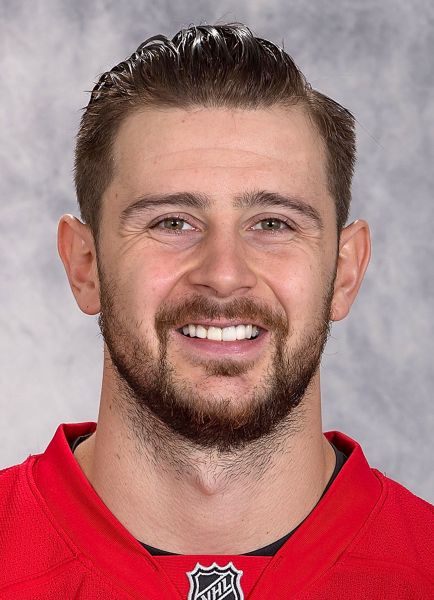
On the ice, things have gone about as poorly as they possibly could go in this inaugural season for the Seattle Kraken. With the team firmly planted in last place in the Pacific Division and pushing for a lottery pick in the 2022 NHL Entry Draft, it has become abundantly clear that the current roster does not have the offensive skill needed to compete for a playoff spot. This means general manager Ron Francis will be a seller at the upcoming March 21 trade deadline, as he looks to build for the future.
What Seattle does have, though, is a core of solid role players and flexibility to make changes after this season, thanks to cap room and expiring contracts. For most of those expiring contracts, it seems like the Kraken have the power to choose whether to bring back the player. But one individual whose status beyond this season remains especially murky is Calle Jarnkrok, who may be playing himself out of town… in a good way.
Should the Kraken move him before the deadline, or should they try to re-sign him? Would he re-sign if given the opportunity? Let’s try to get to the bottom of those questions.
A tale of two seasons
The season got off to a tough start for Jarnkrok, who missed the entirety of the team’s opening five-game road trip with COVID. That included his return to Nashville, where he played the previous seven seasons. He debuted in the Oct. 23 home opener against Vancouver and went without a single point in his first 12 games as a Kraken. Jarnkrok has always been more of a two-way player than an offensive juggernaut, but 12 games was a long time to go without even registering so much as an assist.
On Nov. 21, the 30-year-old Swede looked like he was ready to break out of his early-season funk. He scored a goal and an assist in a memorable win against the Washington Capitals and was absolutely flying that night. But the following game, Jordan Staal of the Carolina Hurricanes fell awkwardly on Jarnkrok’s leg, and just like that, Jarnkrok was back on the shelf for six more games.
“Yeah, it was pretty tough at first to just stay home from the first game and watch the guys go play,” Jarnkrok said in an interview on Saturday. “It took me a while to get going for sure. After that, and after that second injury that I had, I feel like I’ve been playing better.”
“He had the challenge of going through COVID early on,” coach Dave Hakstol said on Jan. 25. “And I believe as you miss time early in the year, and you’re not feeling great, it’s physically hard to catch up when you’re doing it on the fly. I would apply that to his first four to six weeks when he came back.”
After returning from the second injury, Jarnkrok did turn his season around and has since become one of the Kraken’s more reliable forwards at both ends of the ice. Since the beginning of December, he has nine goals and 20 points in 29 games, or .689 points per game during that span. If he continues at that pace for the remainder of Seattle’s 27 games, Jarnkrok would set a career high with 40 points, despite the 11 games lost and the 12-game pointless streak.
Earlier this season, we asked Jarnkrok what had changed in his game. “I don’t know if much has changed, to be honest with you,” he said. “I’m still the same player trying to work hard every game, just having some more luck and been able to score.”
What should the Kraken do with Calle Jarnkrok?
If Jarnkrok wants to stay in Seattle beyond this season, we think he’s shown enough to earn himself an extension on his contract, which is expiring after this season. The current deal, originally signed with Nashville in 2016, has paid him $2 million per year for the last six seasons. That’s a reasonable number against the salary cap, especially when you consider that players like Rickard Rakell, Brendan Gallagher, and Viktor Arvidsson have produced similar offensive numbers over the past few seasons and all make significantly more money.
The difference between Jarnkrok and those three players is that those players have all had big individual seasons in the past with over 30 goals, but are all a few years removed from doing so. Looking at more recent outputs, Jarnkrok is producing comparably, so we think the current contract is a good value. Jarnkrok should probably get a nice raise on his next deal, but we would expect the number to still be manageable for a lot of teams.
The case for keeping Jarnkrok
One thing the Kraken have successfully done this season is create an identity as a team that is hard to play against, doesn’t cheat, and brings effort (almost) every night. The lack of results hasn’t been for lack of trying, rather a lack of top-end skill.
It’s worth asking who the core players are that have helped to build that identity. Who from the current group drives that effort? Which players continue to push the team forward if an infusion of skill comes in the next couple seasons?
Jarnkrok has solidified himself as a versatile player that brings that effort night after night and has done everything asked of him. He has been used on the power play and penalty kill and played up and down the lineup. Heck, with Jared McCann injured, Hakstol has had Jarnkrok playing in a top-line center role the last couple games.
“He jumped in there the other night [against Boston], and he did a real nice job of it,” Hakstol said on Saturday. “Jarny is a guy that’s got a real good defensive DNA. He just understands and sees the game from that side, as well as the offensive side. So that along with the fact that he’s taking face-offs regularly for us this year, he was very comfortable playing down low defensively, and he has pretty good poise with the puck to be able to get us out of the zone and those tighter spots.”
All this indicates that he would be a good player to keep around next season and beyond, but we still think the allure of trading him for a pick and/or a prospect will be too enticing for Francis.
The case for trading Jarnkrok
At this point, the Kraken really should be open to trading almost anybody, with very few exceptions. For a guy like Jarnkrok on an expiring contract at a reasonable cap hit, we fully expect teams to come calling, especially considering that he has shown the ability to play anywhere in the lineup and has plenty of playoff experience. In fact, we think Jarnkrok may be the most valuable trade chip Seattle has, at least in terms of its players on expiring contracts.
At this very early stage in the history of the Kraken, it’s hard to imagine any of the players leaving, since this is the only iteration of the team that we know. But the long-term success of the Kraken isn’t about this year, and it probably isn’t about next year either, so any return that Francis can get should be considered.
We asked Francis during his press conference on Tuesday if he sees Jarnkrok or others on expiring contracts like Marcus Johansson fitting in as part of the core beyond this season. “Those would be discussions over the next few months– you know, some of it depends on what teams call and ask for or are willing to give you for them,” Francis said.
“The other thing is maybe having that discussion as to what [the players] are thinking and what they’re looking for moving forward. I mean, there’s always the option of trading a guy and then kind of sitting there waiting and see what happens in the summertime. So there’s a lot of different scenarios that play out, but certainly, those guys have come to play hard for us each night and we appreciate what they’re doing for us.”
That last option that Francis mentioned of trading Jarnkrok now and looking to re-sign him as a free agent in the offseason makes a ton of sense.
We hate to say it, because we love Jarnkrok’s game, but the right move is to trade him before the deadline.
Does Jarnkrok want to return?
Even if the Kraken preferred to keep Jarnkrok, rather than trading him, would he want to stay?
Jarnkrok says he has enjoyed his time in Seattle, and speaks highly of what the Kraken have built so far. “Everything’s been good. Organization is awesome, all the facilities, this is the best place right here,” he said, referencing Kraken Community Iceplex. “Results haven’t been good enough, and except for that, I think it’s been unbelievable here.”
So what does he want to do beyond this season?
“I haven’t really thought about it. At the end of the day, it’s a business, and it’s not up to me, really, to be honest with you. I really like it here, and that’s all I can say.”
With the NHL trade deadline just four weeks away, we thought it would be a good time to look at previous trade deadlines to help prepare on what to expect over the coming month. This will be focused on the league as a whole and not necessarily on how the Kraken might approach the deadline, but don’t worry, we will write about what to expect from the Kraken in the coming weeks as well.
Ramping up to the trade deadline
So far, the ramp has been slow compared to past years, even with the two trades made in the last week. There typically aren’t that many done at this stage in the season anyway, but it’s worth noting that we’re lagging a little.
In the past five seasons, roughly 80 percent of the trades during this four-week window have occurred in the final week before the deadline. The lesson here is to try to exhibit patience if Seattle has still not traded anyone headed into the final week.
Here is how the totals look by season.
It is interesting to look at the drop last season from the prior season. This could be driven my salary cap constraints adding to the difficulty of getting deals done and also the challenges of getting players into and out of Canada. We will have to monitor the volume of trades this year to see if that drop in 2020-21 is the start of a trend or just a blip on the radar.
Let’s make a deal
Every team has a different set of needs and assets around the trade deadline that varies from season to season, so using historical data to predict a team’s future behavior is somewhat futile. Even so, we thought it was still worth looking at the quantity of trades each team has done around the trade deadline over the last five years.
One thing that was interesting is that there were four teams that did not make a trade prior to the deadline last year: Arizona, Dallas, Minnesota, and St. Louis. In 2019-20, all teams made at least one trade. Again, the flat cap situation facing all teams could be a contributor here.
Trade deadline asset mix
At a high level, there are only two assets a team can trade: draft picks and players. Here is how that has broken down over the last five seasons.
There is a bit of nuance to the player assets, as some could be NHLers or prospects (AHL/CHL), and some deals could just be for signing rights. Signing rights deals are done for players that might have been drafted in years prior but for various reasons might not have signed their standard NHL entry deal. These would include drafted players that are still playing in college, for example.
Here is how the player assets breakdown.
Breakdown of traded draft picks
For Seattle Kraken fans, something to keep an eye on is the draft picks that will be trading hands, specifically what draft pick assets could be traded to Seattle. Here is a look at all the draft picks that changed hands over the last five seasons.
The important piece of information here is that it is rare to trade a first-round draft pick during the trade deadline. If you were hoping Mark Giordano would snag a first-round pick, it is certainly possible but could be a challenge as teams seem less willing to part with their top picks.
As a team that clearly will not be making the playoffs this year, the Seattle Kraken have several player assets that could be moved in the next four weeks. Our hope is sharing these historical trade deadline numbers gives you context and a different perspective on evaluating trades as we march toward the trade deadline.
If you have an questions, takes, or predictions, leave them in the comments section.
The Stanley Cup Playoffs are back, and the MassMutual East Division opens this weekend with a couple of enticing matchups as the Boston Bruins face the Washington Capitals and the Pittsburgh Penguins take on the New York Islanders.
It starts Saturday with a fun matchup between two veteran teams with opposite strengths, and Sunday we get to see if the Penguins are truly back. This is just the beginning so prepare your couch for heavy use as we watch it all play out over the next month and a half.
Here’s a look at the first round matchups for the MassMutual East Division:
New York Islanders (4) vs. Pittsburgh Penguins (1)
The Matchup – Two years ago these teams met in another first-round matchup that resulted in a sweep by the Islanders. The Penguins come into this series hot, winners of three in a row and eight of the past 10. It’s not the same for New York, which started the season strong but has trailed off down the stretch and limped into the playoffs.
Pittsburgh had a resurgent season of sorts and after two early postseason exits in a row will have some pressure to go further this time around. Offensively, Crosby has been what you’d expect him to be and will be the focus again. The Penguins overcame some injuries this season but got Malkin back in the fold near the end of the season and are firing on all cylinders while scoring the most goals in the division and second-most in the NHL.
New York held onto top spot in the division at one point, but it’s been a struggle for coach Barry Trotz and his troops. To try and add some offensive punch, the Islanders picked up Travis Zajac and Kyle Palmieri from New Jersey. The two longtime Devils have not provided said punch, however, and have combined for just three goals.
The Penguins have the league’s fourth-best power play, which sets up a strength-on-strength situation in this matchup as the Islanders are sixth on the kill. Conversely, the Islanders are near the bottom of the stack in power-play rankings while the Penguins have struggled to consistently kill off penalties.
Wild Cards
While the trade with the Devils didn’t pan out as the Islanders had hoped, they have been getting contributions from rookie Oliver Wahlstrom who potted 12 goals and 21 points in 44 games. He could end up being a factor providing some much-needed secondary scoring for the offensively challenged Islanders.
The Penguins added Jeff Carter at the deadline and the veteran has been hot, potting nine goals. He adds more options for the already stacked Penguins attack.
Both clubs have some options for the Seattle Kraken to track in preparation of July’s Expansion Draft. Pittsburgh will have choices to make between protecting quality depth forwards Teddy Blueger, Jared McCann, or Brandon Tanev. The Islanders have some cap issues that could expose guys like Leddy, Bailey, Michael Dal Colle, or potentially rookie Keiffer Bellows.
Who’s going to win this?
In one corner the Penguins have one of the top offensive attacks in the NHL, and they’ll be facing one of the stingiest teams in the Islanders. This will come down to who can impose their will more. Trotz will try to slow things down for the Islanders to hinder Crosby and company. In the end, the Penguins have too much firepower resulting in a Pittsburgh win in six games.
Washington ended the season tied with Pittsburgh but lost out on the division title because of a tiebreaker. Both are veteran-laden teams that still have pieces from their most recent Stanley Cup triumphs, so there won’t be an experience edge for anyone. Storylines abound in this series as Boston legend Zdeno Chara returns to face the Bruins as a Capital.
Boston’s top line of Pastrnak, Bergeron, and Marchand continue to be among the best in the league and the Capitals will need Chara and Brenden Dillon to stand tall on the back end. The Bruins rely on the big three for scoring – they scored 72 of Boston’s 168 goals this year – but that might not be enough. Players such as David Krejci and Craig Smith need to find a way to score. In goal, Rask is playing in what could be his last season in Boston and that will be motivation for one more kick at the can.
Washington has been consistent all season and appears to have overcome an injury scare to Ovechkin late in the season. The Russian star can still fire the puck, and while the Bruins have one of the best defenses in the NHL, nothing seems to stop Ovechkin. One of the top goal-scoring teams, the Capitals have depth scoring and outside of their top players, T.J. Oshie, Evgeny Kuznetsov, and Tom Wilson can pick up the slack scoring wise.
Both teams are good on special teams, which should be a wash. But in any playoff matchup, discipline is key.
Wild Cards
Boston won the trade deadline’s biggest chip by landing Taylor Hall from Buffalo. Since joining the Bruins he’s been good with 14 points in 16 games. The Bruins struggled to score consistently prior to Hall arriving, and he could be the key to closing the gap with Washington. Vanecek has been a revelation for the Capitals this year, but he is unproven. The rookie has never played in a Stanley Cup Playoff game, and he’ll need to rise to the occasion to beat the Bruins in this matchup.
Kraken watch
Seattle could end up getting some key players at the Expansion Draft out of this playoff matchup. For Boston, they may end up exposing players such as Nick Ritchie up front or defenders Jeremy Lauzon or Connor Clifton. Washington is an interesting team to watch for the Kraken. Vanacek could be an option in goal but has played so well that Washington could end up protecting him and exposing Ilya Samsonov instead.
Who’s going to win this?
The Bruins are the defensively oriented team while the Capitals scored all the goals this season. It’s always a fun playoff matchup when strengths are at odds. Boston needs to find secondary scoring and could get it from Hall. Will he be enough to push the Bruins past the rookie Vanacek and into the second round? Yes, Boston in six.
The NHL trade deadline is always a fun time for NHL fans. If our team is in the thick of the playoff picture, we hope it makes huge trades and pushes all our collective chips into the center of the table with hopes of playing for the Stanley Cup.
But is this the right approach? Do we want to mortgage the future in hopes of acquiring the top player from the TSN trade bait board? Does it even work?
Against my better judgement, I went back and reviewed the last five trade deadlines of the Stanley Cup Finalists in hopes of clarifying if going “all in” is the right approach to the trade deadline.
2016 trade deadline acquisitions
Stanley Cup champion
Justin Schultz was the primary acquisition at the trade deadline by the eventual 2016 Stanley Cup Champion Pittsburgh Penguins.
The only notable move the Pittsburgh Penguins completed around the trade deadline was the acquisition of Justin Schultz from the Edmonton Oilers for a third-round pick.
At the time, the move was not thought to be very significant, and Pittsburgh did not give up much to get him. Schultz drew into 15 of the 24 playoff games for the Penguins and averaged just 13 minutes of ice time in those games, the lowest time on ice across all Penguins defensemen.
While Schultz did not play a significant role in the Penguins 2016 playoff run, he played four more seasons with the Penguins and contributed significantly to their 2017 Stanley Cup Championship.
Stanley Cup runner-up
The San Jose Sharks did not make any significant moves at the trade deadline in 2016. The team swapped back-up goalies with the Toronto Maple Leafs (Alex Stalock for James Reimer).
In a separate trade with the Leafs, the Sharks acquired Roman Polak and Nick Spaling for a pair of second-round draft picks. Polak played in all 24 of the Sharks’ playoff games but did not register a point. One of those draft picks turned into Maxime Comtois, who is having himself a pretty good season currently.
Other notable trades from the 2016 NHL trade deadline
The New York Rangers swung for the fences and acquired Eric Staal from the Carolina Hurricanes for two second-round draft picks and the signing rights to Aleksi Saarela. The Rangers lost in the first round of the Stanley Cup Playoffs and although it is still early to assess the prospects that Carolina acquired in the trade, they have only played a collective nine NHL games since being traded to the Hurricanes organization.
2017 trade deadline acquisitions
Stanley Cup champion
The Pittsburgh Penguins added Ron Hainsey at the trade deadline for a second-round draft pick. Hainsey logged the second-most minutes on the Penguins during the Stanley Cup Playoffs and pitched in with eight points across the 25 Penguins playoff games.
Stanley Cup runner-up
The Nashville Predators did not add any players of significance at the trade deadline.
Other notable trades from the 2017 NHL trade deadline
Kevin Shattenkirk was a trade deadline acquisition by the Washington Capitals in 2017.
Kevin Shattenkirk was traded to the Washington Capitals with goaltender prospect Pheonix Copley for two prospects and two draft picks, a 2017 first-round and 2019 second-round pick. The St. Louis Blues defenseman was considered one of the prized targets of the trade deadline in 2017. Shattenkirk played fine for the Capitals in the playoffs, but Washington was eliminated by the Penguins in the second round of the Stanley Cup Playoffs. Shattenkirk signed with the Rangers in the ensuing offseason.
The Minnesota Wild sent a prospect and three draft picks (first, second, and fourth-round picks) to Arizona for Martin Hanzal, Ryan White, and a fourth-round pick back to the WIld. Minnesota was eliminated in the first round and Hanzal posted one point in the five playoff games. White played three of the playoff games and has been bouncing around the AHL ever since.
2018 trade deadline acquisitions
Stanley Cup champion
Perhaps learning their lesson from the big swing they took on Shattenkirk a year earlier, the Washington Capitals only added Michal Kempny at the trade deadline from Chicago for a third-round pick.
Kempny played in all 24 Capitals playoff games and averaged about 17 minutes of ice time per game. He did not show up on the score sheet that often, but he was an important depth piece for the Caps championship run.
Stanley Cup runner-up
Tomas Tatar was a trade deadline acquisition by the Golden Knights in 2018 but would appear in less than 50% of the Golden Knights playoff games.
Flush with draft picks from the 2017 Expansion Draft, the Vegas Golden Knights took a big swing at the 2017 trade deadline on Tomas Tatar. The Detroit Red Wings received three draft picks: a first, second, and third-round pick from Vegas.
In retrospect, the Tatar trade was a disaster. Tatar was a healthy scratch through most of the playoffs, appearing in just eight of the Golden Knights’ 20 playoff games. He was packaged up with Nick Suzuki and another draft pick in the offseason in a trade with Montreal for Max Pacioretty.
Vegas also added Ryan Reaves in a trade with the Pittsburgh Penguins. Although popular with the fans, Reaves only got into 10 playoff games and averaged only eight minutes.
Other notable trades from the 2018 NHL trade deadline
The Tampa Bay Lightning pulled off a big trade with the New York Rangers, acquiring Ryan McDonagh and JT Miller for Vladislav Namestnikov, Brett Howden, and Libor Hajek plus two draft picks (first and second-round picks).
Tampa advanced to a game seven in the Conference Finals against the eventual Stanley Cup Champion Washington Capitals. McDonagh and Miller both played a significant role in the Lightning’s playoff success that year. McDonagh logged the second-most minutes behind Victor Hedman while Miller chipped in eight points over the Lightning’s 17 playoff games.
The San Jose Sharks traded a prospect and two draft picks (a first and a fourth) for Evander Kane. The Sharks were eliminated in the second round of the playoffs and Kane had five points in the nine games he played. The Sharks re-signed Kane in the offseason and currently leads the team in goals scored since he joined the Sharks organization.
Winnipeg acquired Paul Stastny from the St. Louis Blues for a prospect and two draft picks (first and fourth-round). The Jets were eliminated by the Golden Knights in the Stanley Cup Conference Finals. Stastny played very well for the Jets in the playoffs with 15 points in 17 games. He became a free agent in the offseason and signed with Vegas.
Rick Nash was traded to the Boston Bruins by the Rangers for Matt Beleskey, Ryan Spooner, signing rights to Ryan Lindgren, a first-round, and a seventh-round draft pick. The Bruins lost in the second round of the playoffs where Nash posted five points in 12 games, his final season in the NHL.
2019 trade deadline acquisitions
Stanley Cup champion
St. Louis Blues essentially did nothing at the trade deadline. They acquired Michael Del Zotto for a sixth-round draft pick. Del Zotto appeared in just seven regular-season games for the Blues and did not crack the lineup during their Stanley Cup Playoff run.
Stanley Cup runner-up
Boston Bruins added two significant pieces to their roster in Charlie Coyle and Marcus Johnsson. Coyle was acquired from the Minnesota Wild for prospect (at the time) Ryan Donato and a fourth-round draft pick. Johansson was acquired from the New Jersey Devils for a second and fourth-round draft pick.
Coyle and Johansson had 16 and 11 points respectively in the Bruins playoff run. At the time Coyle had one additional year on his contract and signed a six-year extension with Boston that started with the 2020-21 season. Johansson became an unrestricted free agent after the 2019 playoff run and signed with Buffalo.
Other notable trades from the 2019 NHL trade deadline
The Vegas Golden Knights acquired Mark Stone from the Ottawa Senators for Oscar Lindberg, Erik Brannstrom, and a second-round pick. Stone signed an eight-year extension with the Golden Knights shortly after joining the team during the 2018-19 regular season. Vegas eventually lost to the San Jose Sharks in the opening round of the playoffs and Stone accumulated 12 points in seven games. Stone also leads Vegas in points since being acquired in 2019.
Winnipeg acquired Kevin Hayes for Brendan Lemieux plus a first and fourth-round draft pick. Winnipeg was eliminated in the first round of the playoffs where Hayes had three points over six games. Hayes entered free agency in the offseason and signed with the Philadelphia Flyers.
2020 trade deadline acquisitions
Stanley Cup champion
The Tampa Bay Lightning acquired Barclay Goodrow and a third-round pick from the San Jose Sharks for Tampa Bay’s first-round pick of the 2020 NHL Entry Draft and prospect Anthony Greco. The Lightning also acquired Blake Coleman from the New Jersey Devils for prospect Nolan Foote and a first-round pick in 2020.
Both Coleman and Goodrow were considered modest trades when they happened but have been widely acknowledged as a significant reason why the Lightning won the Stanley Cup in 2020. Both of them logged about 18 minutes per game and were a major part of the team’s penalty kill in the Stanley Cup Playoffs. Goodrow logged the most penalty kill time on the ice (70+ minutes) amongst forwards for Tampa during the playoffs while Coleman was third in penalty kill ice time (~60 minutes) amongst forwards.
Stanley Cup runner-up
The Dallas Stars made no material moves around the 2020 trade deadline.
Other notable trades from the 2020 NHL trade deadline
New York Islanders acquired Jean-Gabriel Pageau for a first-round and second-round pick from the Ottawa Senators. Pageau signed a six-year extension with the Islanders shortly after being traded and had eight goals in 22 games in the Islanders’ playoff run to the Conference Finals.
The Hurricanes did not have one big trade, but they made a series of moderate trades in acquiring Vincent Trocheck, Brady Skjei, and Sami Vatanen in three unique deals.
Trocheck was acquired from Florida for Erik Haula, Lucas Wallmark, and two prospects.
Skjei was acquired from the New York Rangers for a first-round draft pick.
Vatanen was acquired from New Jersey for two prospects and a third-round draft pick. One of those prospects was Janne Kuokkanen who is having a pretty good year in his first full NHL season with 20 points in 34 games.
None of them had much success in the playoffs but at the time of the trade, both Skjei and Trocheck had term remaining on their contracts and remain with the team this season. Trocheck is having one of the better seasons of his career.
Finally, the Golden Knights acquired their eventual playoff starting goalie, Robert Lehner, and also added a top-pairing defenseman in Alec Martinez with trades with the Chicago Blackhawks (with a little help from the Toronto Maple Leafs) and the Los Angeles Kings, respectively.
Lehner costed the Golden Knights Malcolm Subban, two draft picks, and a prospect.
Martinez was obtained with two second-round picks to LA.
Both Lehner and Martinez played well in the Stanley Cup Playoffs for the Golden Knights before being eliminated in the Conference Final against the Western Conference champion Dallas Stars.
Is it worth it?
It is hard to reach a definitive conclusion on the right approach teams should take to the trade deadline based on our research of the prior five trade deadlines, but it is hard to find a team that went all in where it paid off. It can be debated that of the last five trade deadlines, the only team that went big during the NHL trade deadline that reached the Stanley Cup Final was the 2019 Boston Bruins.
Conversely, the 2016 New York Rangers, 2017 Washington Capitals, 2018 Tampa Bay Lightning, and 2019 Vegas Golden Knights went big at the trade deadline without material success in the subsequent Stanley Cup Playoffs.
What are your thoughts? Do you recall a time where a team took a big swing at the trade deadline that paid off in the Stanley Cup Playoffs?
If hockey is what you seek, then the past week should have been quite fulfilling for you, because there was a LOT of it to be found. What’s more, much of the hockey that was played was quite entertaining, with each game across the various elite leagues seemingly more exciting than the previous. If this past week of hockey were a GIF, it would certainly be the Vince McMahon GIF seen below.
Yes, it has been a fun week, and we at Sound Of Hockey endeavor to continue satiating your appetite for hockey enjoyment with this latest installment of Weekly One-Timers.
Is Ron Francis wheeling and dealing?
It makes sense that Seattle Kraken general manager Ron Francis would be talking to his counterparts across the NHL to gauge their varying levels of interest in consummating side deals in the lead-up to the Expansion Draft this summer. But we’ve never officially seen or heard it reported that this was happening. Well, until now, that is.
The Athletic’s Pierre Lebrun wrote this week that Francis has been fielding calls from fellow general managers in advance of the April 12 trade deadline, as they try to get a better feel for what it will cost to keep the Kraken’s tentacles off of any newly acquired players. Lebrun also reported that according to his source, Francis is asking for “a first-round pick and a prospect and maybe another piece.”
Lebrun also discusses this starting at the 3:04 mark of the below video.
So, that’s fun.
THE KRAKEN ARE WHEELIN’ AND DEALIN’! LET’S GO!
The real March Madness
Marathon game
You saw the marathon game between North Dakota and Minnesota Duluth, right? Or at least part of it? Because it went on for six hours and 12 minutes, so you had to have at least stumbled upon it while scrolling through channels at some point in your Saturday evening. In the end, it was UMD — for the fourth consecutive time — punching its ticket to the Frozen Four, while UND players looked sad.
It was just an incredible contest in every aspect with bizarre things happening throughout. Case in point, UMD’s starting goalie, Zach Stejskal, was forced out in the fifth overtime due to cramps. He was replaced by Ryan Fanti, who came in and made several huge saves after sitting on the bench for five hours. In total, 119 shots were taken, 142 minutes and 13 seconds ticked off the clock, and one record was set for the longest game in NCAA history on either the men’s or women’s side.
UMD now has a shot at its third straight NCAA title in a year that was supposed to be transitional for the Bulldogs.
Frozen Four field set
UMD will be joined in Pittsburgh by UMass, St. Cloud State, and Minnesota State.
UMass reached the final in 2019, but at that time, they had the likes of Cale Makar, John Leonard, and Mario Ferraro, all of whom are now well on their way to successful NHL careers. This is another team that largely flew under the radar this season, but got hot at the right time, earning a Hockey East postseason championship along the way. Zac Jones, a New York Rangers draft pick, and Matt Kessel, a St. Louis Blues draft pick, make up the top defense pairing, and together they are quite exceptional.
St. Cloud lost one of its best offensive players in Easton Brodzinski in the team’s regional championship against Boston College. Brodzinski broke his leg on a nasty (but clean) hit when he cut to the middle of the offensive zone. The Huskies really aren’t built around their stars, though, as they’re an experienced team that has been through the wringer.
Minnesota State may be the most intriguing story of the Frozen Four field. The Mavericks hadn’t won a single NCAA Tournament game in their history before defeating Quinnipiac in the opening round, then following that up with a convincing victory over a favored Minnesota Gophers team.
Ryan Sandelin, son of UMD head coach Scott Sandelin, scored the overtime game-winner against Quinnipiac to keep hopes alive for a father-son showdown in the NCAA title game. Goaltender Dryden McKay has had dizzying numbers over three collegiate seasons and earned a 22-save shutout over the Gophers to send his team through. He was named a Hobey Baker finalist, along with Wisconsin’s Cole Caufield and North Dakota’s Shane Pinto. Shockingly, McKay is undrafted.
The NCAA semifinals will take place on Thursday, April 8, and the final will be on Saturday, April 10.
Signing frenzy
With so many NCAA teams seeing their seasons come to crashing halts, there was a flurry of signings of high-end NHL prospects this week.
Player
Age
Old Team
New Team
Cole Caufield
19
University of Wisconsin
Montreal Canadiens
David Farrance
21
Boston University
Nashville Predators
Alex Steeves
21
Notre Dame
Toronto Maple Leafs
Matthew Boldy
19
Boston College
Minnesota Wild
Alex Newhook
19
Boston College
Colorado Avalanche
Spencer Knight
19
Boston College
Florida Panthers
Shane Pinto
19
University of North Dakota
Ottawa Senators
Cam York
19
University of Michigan
Philadelphia Flyers
Most of these players will need some seasoning in the AHL, but there’s some serious talent in the aforementioned group, so you should see at least some of them at the top level soon.
On the topic of signings, Thatcher Demko agreed to a five-year extension with the Vancouver Canucks worth $25 million, so apparently he isn’t a future Seattle Kraken after all. Bummer!
The #Canucks signed 25 y/o G Demko to 5 yr $5M Cap Hit extension:
Yr 1: $2.5M Base Yr 2: $3.5M Base, $1M Signing Bonus Yr 3: $6M Base, $1M Signing Bonus Yr 4: $6M Base Yr 5: $5M Base
The fine system is absurd. $5,000 is the most the NHL can fine a player based on the collective bargaining agreement with the NHLPA. McDavid makes $12.5 million per year. Do you know what $5,000 is to somebody who makes $12.5 million? Well, the median salary for all Americans is $31,133 according to the US Census Bureau. Fining somebody $5,000 when they have a $12.5 million salary is the same—in terms of percentage of income—as fining somebody who makes the median American salary exactly $12.44.
That oughta show ’em!
Around the boards
USA Hockey named Chicago general manager Stan Bowman and Minnesota general manager Bill Guerin as its GM and AGM respectively for the 2022 Winter Olympics in Beijing. The appointments come with a caveat that if NHL players do not end up participating, Bowman and Guerin will not lead the brain trust.
The “Fox Sports [insert your region here]” network of… networks… is no more, instead replaced by something called Bally Sports. Bally’s owns and operates casinos across the nation, so you can bet your bottom dollar (get it?) that there will be some sort of wagering-related programming and promotions coming soon to a Bally network near you. The scorebug on the newly re-branded Bally networks is obnoxiously large, so there is already plenty of space for live betting odds in regions where sports gambling is legal.
Shayne Gostisbehere was put on waivers by the Philadelphia Flyers this week. All 30 other teams passed on claiming the puck-moving defenseman, so he was assigned to the taxi squad. There was a time when we at Sound Of Hockey thought Gostisbehere could be a good fit for the Kraken. We still kind of think that, but we’re a tad more apprehensive now.
The University of St. Thomas has hired Rico Blasi as its head coach to lead the team’s transition from Division III to Division I next season, when the Tommies will join the newly re-formed CCHA. Blasi previously coached Miami University (Ohio), where he spent twenty seasons behind the bench and posted an overall record of 398–311–76.
The Canucks have Covid, and it sounds like this could be a lengthy shutdown for the team. It is not a good situation, as at least eight players have tested positive as well as at least one member of Vancouver’s staff. Here’s hoping for quick recoveries for all involved in this latest outbreak.
Yes, the 18-game winless streak is finally over after a 6-1 drubbing of the Gostisbehere-less Flyers on Wednesday.
The very next night, Jeff Skinner had a stickless breakaway. The Rangers scored shortly after the below fiasco and ultimately won this one 3-2 in overtime to sum up Buffalo’s season quite nicely.
Darren Brown is the Chief Content Officer at Sound Of Hockey and the host, producer, and editor of the Sound Of Hockey Podcast. He is an inconsistent beer league goalie who believes that five players have to make a mistake before the puck gets to him. Follow him on Twitter @DarrenFunBrown or email darren@soundofhockey.com.
Any trades between now and the NHL trade deadline on April 12 should help solidify the 30 rosters of teams participating in the NHL Expansion Draft in July. But Kraken fans should also be keeping an eye out for several potential extensions and therefore additions to protected lists across the league that could also shake up some Expansion Draft rosters.
Here are seven teams with potential player contract extensions that could shape their protected lists in preparation for the Seattle Kraken Expansion Draft.
Carolina Hurricanes: Dougie Hamilton
The 27-year-old Hamilton is second in points on the Hurricanes this season and is a big reason behind their success. Re-signing Hamilton is a priority for the Canes and is likely to happen. This will add Hamilton to the defenseman protected list with Jaccob Slavin and Brett Pesce. With the three protected defensemen accounted for, this will expose young prospect Jake Bean who has been cracking the Hurricanes lineup more often this season.
Colorado Avalanche: Brandon Saad and Gabriel Landeskog
Saad and Landeskog are both 28 years old and having productive seasons for the Avalanche. Saad is playing his first year in Colorado after being acquired last offseason in a trade. Landeskog has played his entire career in Colorado and is the captain for the Avalanche. Saad has signaled that he would like to re-sign in Colorado, but the team might only have room for one of the two. If that is the case, then it is probably the captain Landeskog that remains. If the Avs manage to sign both Saad and Landeskog it might force them to expose 23-year-old forward Tyson Jost and solid defenseman Devon Toews from which the Kraken will have to choose.
Edmonton Oilers: Ryan Nugent-Hopkins
RNH has been a pillar in the Oilers’ forward core since he was the first overall pick in the 2011 NHL Entry Draft. It’s hard to get a read on contract negotiations out of Edmonton, but his market value might prove too rich for general manager Ken Holland. If Nugent-Hopkins makes it to free agency, the Oilers will likely protect forward prospect Tyler Benson who has gotten off to a good start in the AHL.
New Jersey Devils: Kyle Palmieri
Palmieri has been the most consistent forward on New Jersey since he arrived in 2015. He has over 20 goals in each of his five seasons with the club. Palmieri is a solid NHL veteran that the Devils will want to keep around as they progress through their rebuild. The downside for the Devils in re-signing him to an extension means that they will need to expose at least one of the younger forwards they have in their stables: Janne Kuokkanen, Yegor Sharangovich, or Nick Merkley.
Nashville Predators: Mikael Granlund
There is a lot of dust that needs to settle in Nashville before we have a clear picture of who they protect. Nashville has a glut of decent forwards on their squad and they cannot protect them all. They will not be able to trade themselves out of exposing at least one of them. If Granlund re-signs, he will be a lock to be protected. Assuming these guys are on the team come July 17, when NHL teams must submit their protection list to the NHL, you can assume Filip Forsberg, Luke Kunin, and Viktor Arvidsson are also locks to be protected in the forward category. After that, the Predators will only be able to protect three of the following forwards: Calle Jarnkrok, Colton Sissons, Matt Duchene, Rocco Grimaldi, Ryan Johansen, and Yakov Trenin. Nashville is expected to be active before the trade deadline so we would expect a lot of this to change between now and the Expansion Draft.
St. Louis Blues: Jaden Schwartz
The Blues are another team that will be in a bit of a bind for the Expansion Draft that will leave some quality middle-six forwards exposed. Locks to be protected are Jordan Kyrou, Robert Thomas, Ryan O’Reilly, Brayden Schenn, and Vladimir Tarasenko. Re-signing Schwartz will add him to the protected list and that means six of the seven slots are filled. That leaves only one spot for David Perron, Zach Sanford, Ivan Barbashev, or Oskar Sundqvist.
Los Angeles Kings: Alex Iafallo
The Kings do not have a whole lot to offer in the Expansion Draft, but there are a couple forwards that could be intriguing should they remain with the team at the time of the draft. Iafallo will be protected if he signs an extension with the Kings. That would likely expose Dustin Brown and Andreas Athanasiou. Of course, if Iafallo walks to free agency and Dustin Brown is traded before the Expansion Draft, the Kraken will not have many options to choose from in LA.
A lot can change between now and July, but monitoring the trade deadline and the re-signing of some of these key players will help us forecast the protection lists for the Expansion Draft.